What Happens at a Foreclosure Auction and Can You Still Save the Property?

TL;DR: At a foreclosure auction, the property is sold to the highest bidder in a public auction, and if no outside buyer meets the lender’s opening bid, the lender takes the property back. Florida law lets a borrower stop the sale by paying off the debt right up until the clerk files the certificate of sale, often the same day. A foreclosure bailout loan can move fast enough to close that gap.
For Florida property owners facing foreclosure, and for anyone trying to understand how a foreclosure sale works and whether it can still be stopped, the auction is the point where a court judgment becomes an actual sale. It is not always the final chance to save the property, though. Knowing who can bid, what happens if no one bids, when a sale can be stopped or delayed, what happens after the auction, and how financing may help can change what you do in the days leading up to the sale.
What Happens at a Foreclosure Auction, Step by Step?
The auction itself follows a fairly predictable sequence under Florida law.
- The court sets a foreclosure sale date after entering final judgment
- The clerk of court publishes public notice of the sale after the lender files the required foreclosure documents
- Potential buyers register in advance, and most Florida counties now run the public auction online
- The property is sold to the highest bidder
- If no successful bidder outbids the lender’s opening amount, typically set from the amount owed under the judgment plus fees and costs, the lender takes the property back
- The clerk files a certificate of sale, usually the same day or the next business day
- A short window opens for objections before the clerk can issue a certificate of title
Who Can Bid at a Foreclosure Auction?
Most Florida foreclosure auctions are open to any registered bidder, not just the mortgage lender. A deposit is typically required at registration, with cash or certified funds due by a set deadline after winning. Because bidders work from limited information about a property’s actual condition, sale prices can land well below fair market value on one property and close to it on another. Buyers should also understand that homeowners may still challenge the sale after the auction if procedural errors occurred. In some cases, the former owner may negotiate a buyback with the new owner after the sale.
What Happens If Nobody Bids on the Property?
If no third party outbids the lender, the lender’s own opening bid becomes the winning bid by default, and the property becomes real estate owned by the lender. This is the outcome a foreclosure notice warns about from the very start of a foreclosure case. A foreclosure attorney can walk through the specific numbers in your judgment, including any unpaid taxes or other liens that could affect what’s owed, and if the sale falls short, the bank may seek a deficiency judgment in Florida within one year. Borrowers may contest the amount by arguing the property’s fair market value. If entered, that judgment can be collected from assets such as wages and bank accounts.
Can a Foreclosure Attorney Still Stop a Foreclosure Once the Auction Is Scheduled?

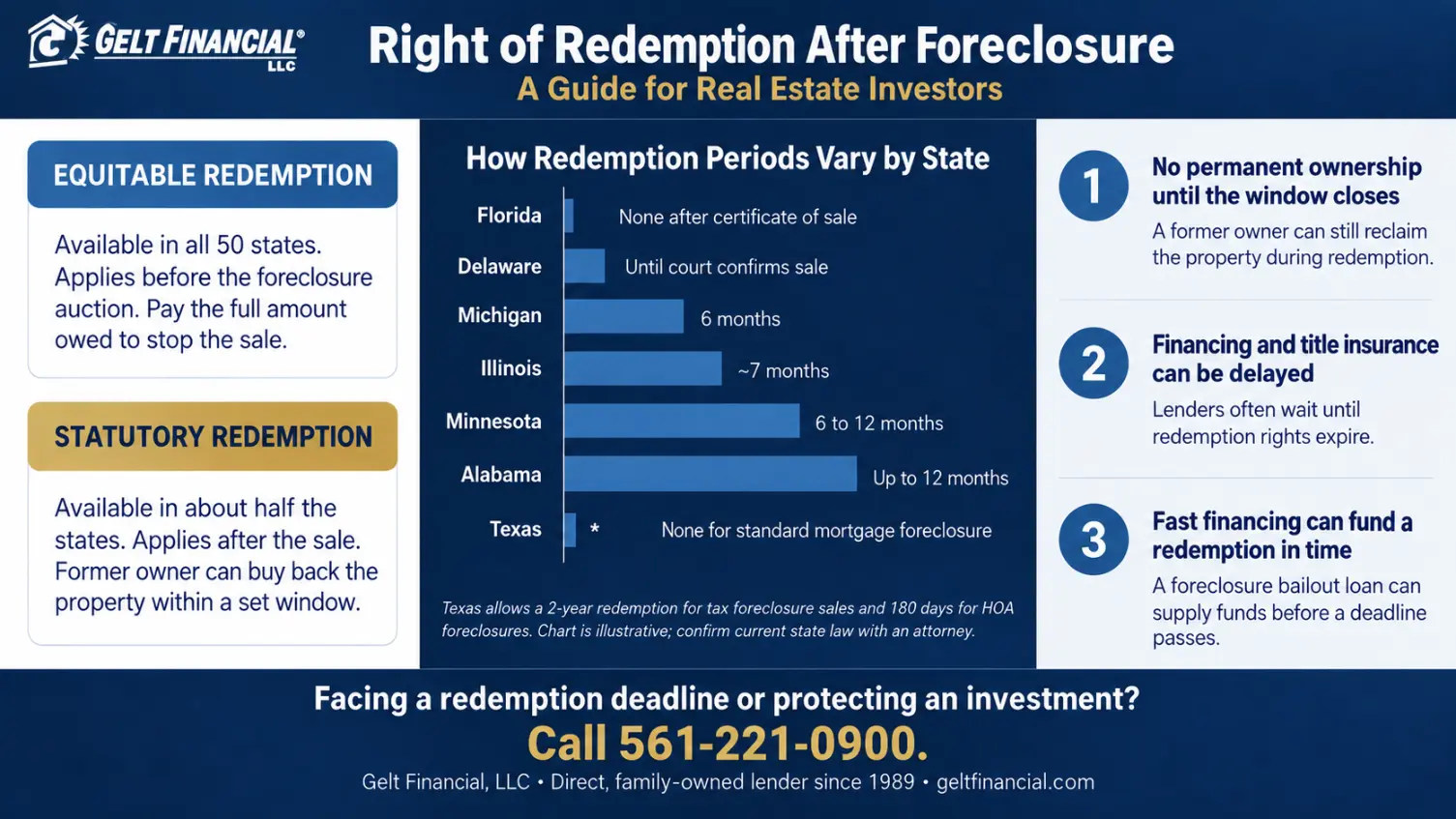
Yes, in most cases. Florida law lets a borrower pay off the amount owed right up until the clerk files the certificate of sale, and that filing typically happens the same day as the auction or the next business day. Homeowners facing foreclosure can sometimes cure the default by catching up overdue mortgage payments before the auction. Unlike states with a redemption period that runs for months after the sale, Florida’s window closes fast once that filing happens. The real deadline that matters isn’t the auction date itself; it’s the moment the certificate gets filed afterward.
This is where timing decides whether a property owner keeps the property or loses it. If keeping the house is no longer realistic, requesting a deed in lieu may help avoid foreclosure. A traditional mortgage lender can’t close a new loan in hours or days. A foreclosure bailout loan can, because approval is based on the property’s equity rather than a lengthy underwriting file. Filing for bankruptcy can also pause the foreclosure action through an automatic stay, but speak with an attorney first.
How Late Is Too Late? A Timeline of Your Options Before the Foreclosure Sale Date
| Time Before Sale Date | Realistic Options Still Available |
|---|---|
| 60+ days | Loan modification, payment plan, short sale, or a foreclosure bailout loan with time to plan |
| 30 days | Foreclosure bailout loan, short sale, or negotiated payoff with your lender |
| 7 days | A foreclosure bailout loan is often the only option fast enough to close in time |
| Day of auction | Payoff is still possible until the certificate of sale is filed, but funds must be ready immediately |
What Happens to the Property Owner After the Auction and During the Redemption Period?
Winning a bid doesn’t hand over possession right away. A short window opens after the certificate of sale is filed, during which any party with an interest in the case can object. Only after that window closes does the clerk issue a certificate of title transferring ownership to the new owner of the foreclosed property. Even then, eviction proceedings are a separate legal step, and the new owner generally must obtain a writ of possession before the sheriff, not the new owner, removes occupants. That process often gives a former homeowner additional time, sometimes several weeks, before they need to leave.
- Homeowners have up to two years to claim excess funds after sale.
- Statutory redemption periods range from 30 days to two years.
- Statutory redemption allows you to regain ownership after a foreclosure sale.
Can a Foreclosure Bailout Loan Stop an Auction at the Last Minute?

Often, yes. Because a foreclosure bailout loan is underwritten around property equity rather than income documentation, it can close in days, sometimes fast enough to pay off the debt before the certificate of sale is filed. This is usually the most stressful stage of the entire foreclosure process, and it’s also the stage where speed matters more than almost anything else. If bankruptcy has come up as an option to delay a sale date, talk to an attorney first, since it carries consequences well beyond the immediate foreclosure case.
Facing a sale date and running out of time? Call us at 561-221-0900 for a free, honest conversation about what’s still possible. We’re a family-owned, direct lender, and we’ll give you a straight answer about whether a bailout loan can work for your situation.
Key Takeaways
- A foreclosure auction sells the property to the highest bidder, or back to the lender if no one else bids
- Florida’s payoff window closes when the clerk files the certificate of sale, often the same day
- A short objection period follows before a certificate of title can be issued
- Eviction proceedings require a separate legal process, giving property owners more time than many expect
- A foreclosure bailout loan can often close fast enough to stop the sale, even within days of the auction
Frequently Asked Questions
Can you stop a foreclosure the day of the auction?
Yes, in many cases, since Florida law allows payoff until the clerk files the certificate of sale, which often happens the same day. Funds need to be ready to move immediately.
What happens if the auction sale sells the property for less than what’s owed?
The lender can pursue a deficiency judgment for the shortfall in many cases, though the details vary by state law and loan type.
Who gets the money if a foreclosure sale price is higher than the debt?
Any additional funds left after the debt, liens, and costs are paid typically belong to the previous owner, who can file a claim with the court to obtain them.
Do you have to leave immediately after a foreclosure auction?
No. Possession doesn’t transfer until a certificate of title is issued, and even then, the new owner must complete a separate eviction process before anyone has to leave.
Is a judicial foreclosure different from a non-judicial foreclosure at auction?
Yes. A judicial foreclosure goes through the court system before the sale is scheduled, while a non-judicial foreclosure skips court involvement entirely, though both end in a public auction.
Facing a foreclosure auction and need to know your real options? Call us at 561-221-0900 today! Gelt Financial is ready to discuss your financing needs for commercial or investment real estate.