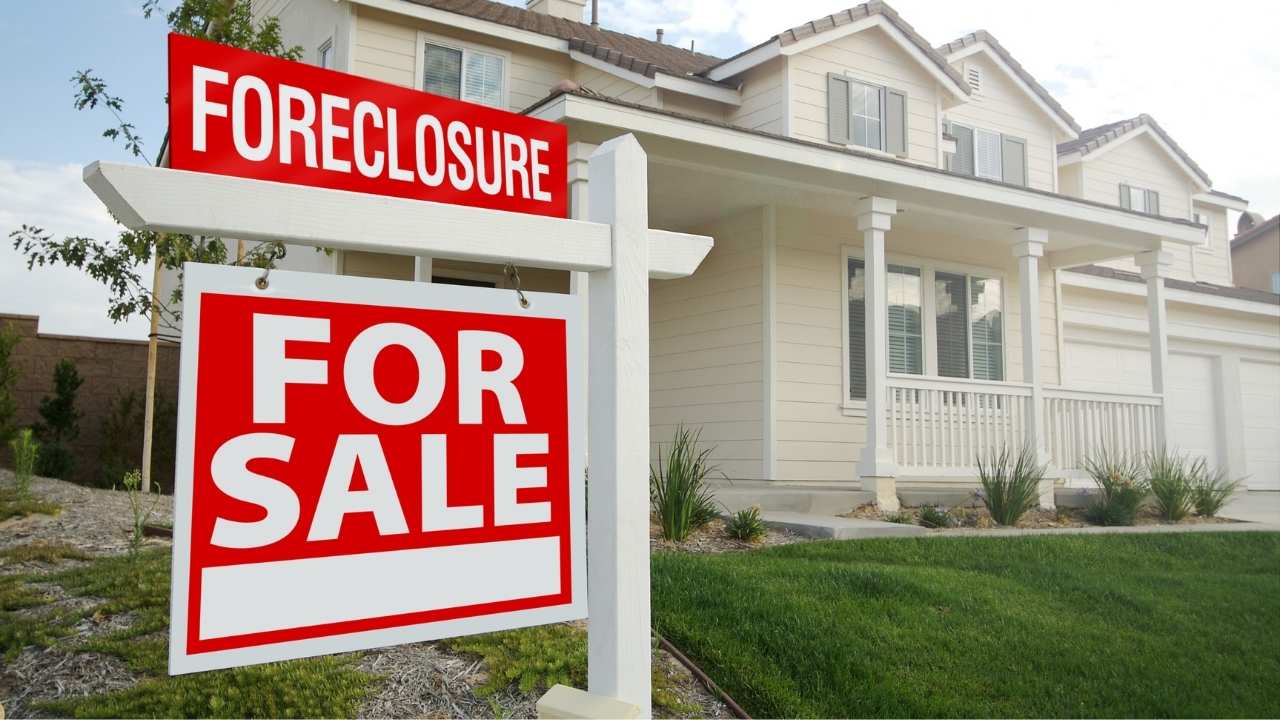
The Foreclosure Process Explained: Timeline and Stages

TL;DR: The legal foreclosure process moves through a set sequence of stages, starting with a missed payment or some other act of default, moving into default notices and legal filings, and ending in a foreclosure auction where the property is sold to the highest bidder. The exact foreclosure timeline depends on your state and whether the legal process is judicial or non-judicial, but property owners typically have several months to act before a sale date is set. A foreclosure bailout loan can stop the process at almost any stage before the sale, if you act quickly.
Foreclosure is the legal process a lender uses to take back a property when a borrower stops making mortgage payments. If you’re a property owner facing foreclosure, this guide explains the timeline and stages, how judicial and non-judicial foreclosure differ, what can happen during the response window, what to expect at auction and after the sale, and where a bailout loan may stop the process before the property is sold. Knowing where you stand in that sequence is the first step toward making informed decisions, exploring alternatives, and acting before the foreclosure sale date is reached.
What Are the Stages of Foreclosure?

Every foreclosure case follows a similar sequence, even though the specific rules vary by state.
- First missed payment and late fee or some other act of default, like a maturity default
- Borrower is considered delinquent; the mortgage servicer sends written notice
- Default and formal notice of default
- Lender files a foreclosure complaint (judicial states) or notice of sale (non-judicial states)
- Response window for the borrower
- Judgment (summary judgment or default judgment) and scheduled sale date
- Foreclosure auction or sheriff sale
- Eviction and transfer of possession, if not resolved earlier
Stage One: Missed Mortgage Payments
The process starts the moment a borrower misses a payment. Most loan servicers apply a late fee after a short grace period, usually 10 to 15 days. If the borrower misses a second consecutive monthly payment, the account is considered delinquent, and the loan servicer typically ramps up contact by phone and mail.
Stage Two: Default and Notice of Default
Once a borrower falls roughly 90 days behind, the loan is in default. At this point, the mortgage servicer sends a formal written notice of default, laying out the amount owed and important deadlines to catch up before legal action begins, and borrowers often have a 30-day grace period after receiving that notice to cure the default. This notice also usually outlines loss mitigation options, such as a repayment plan or loan modification, that may still be available, so it is important to seek assistance from the servicer and review potential options while that notice period is still open. Federal regulations typically call for servicers to wait 120 days after a missed payment before foreclosure.
Stage Three: The Lender Files a Foreclosure Case
If the default isn’t cured, the lender may foreclose by starting foreclosure proceedings. Lenders typically start foreclosure 3-6 months after default. In judicial states, foreclosure begins when the lender’s complaint is filed in court, and the case proceeds through the court system like any other lawsuit. In non-judicial states, the lender instead records a notice of sale, often without court involvement at all. We cover this distinction in detail in our guide to judicial versus non-judicial foreclosure, which is worth reading if you’re not sure which process applies in your state.
Judicial vs. Non-Judicial Foreclosure Timeline
| Stage | Judicial States | Non-Judicial States |
|---|---|---|
| Notice of default | Sent by servicer | Sent by servicer |
| Filing | Lender files a foreclosure complaint in court | Lender records a notice of sale |
| Response window | Borrower can respond to the complaint | Limited or no court response window |
| Judgment | Court enters summary or default judgment | No judgment required |
| Typical total timeline | 6 months to over a year | 2 to 8 months |
Stage Four: The Response Window
Once the lender files a foreclosure case, the borrower typically has a set window to respond, and in some states the homeowner must file an answer within 28 days of receiving foreclosure papers. This stage matters because it’s often the last real opportunity to pursue loss mitigation options like a loan modification, a short sale with the help of a real estate agent, or a foreclosure bailout loan that pays off the existing balance and stops the case entirely. The homeowner should contact an attorney or housing counselor early to preserve options.
Stage Five: Judgment and the Scheduled Sale Date
If the case isn’t resolved, the court enters a summary judgment or default judgment in judicial states, or the notice period simply expires in non-judicial states. Either way, this triggers a scheduled sale date. In some states, notice of the sale must run in a local paper for several consecutive weeks before the auction can proceed.
Stage Six: The Foreclosure Auction
On the sale date, the property is sold at public auction, sometimes called a sheriff’s sale since the sheriff’s office often conducts it in judicial states. A foreclosure sale may happen roughly 150-415 days after the first missed payment, depending on state rules and case timing. In Texas, a Notice of Sale must be delivered at least 21 days before the auction. The property goes to the highest bidder, which may be a third party or the lender itself. If the property does not sell to another bidder, the lender takes title, and it becomes one of the REO properties the bank may later sell.
What Happens After the Sale?

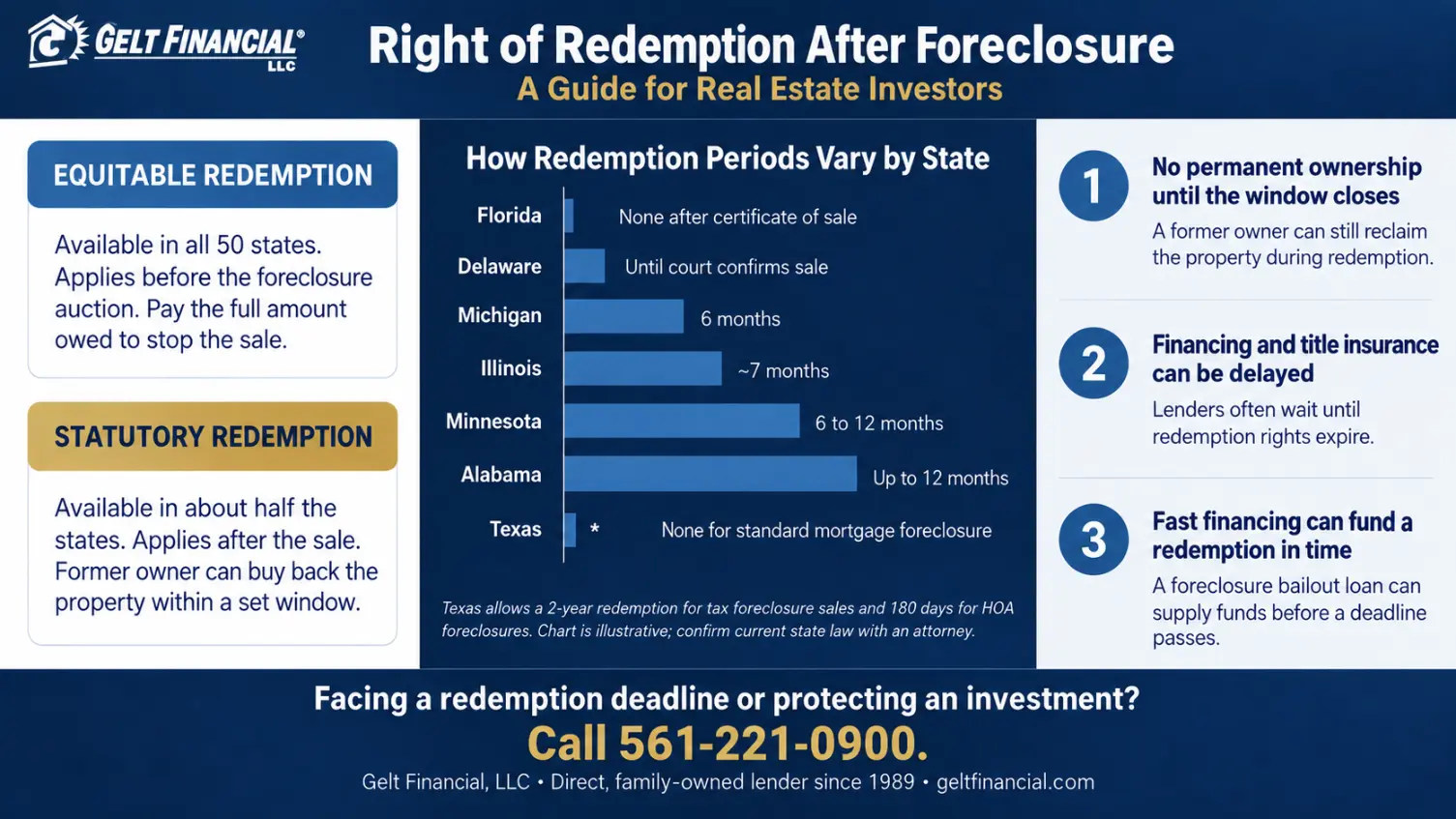
Once the auction closes, the new owner begins taking possession, which may involve an eviction if the former homeowner hasn’t already left. If the homeowner fails to leave or redeem the property, post-sale consequences move forward quickly. Some states offer a redemption period after the sale, giving the homeowner a limited window to reclaim the property by paying the full debt plus interest and fees, and in some states that period can last up to seven months after judgment. Once the redemption period expires, ownership is final. In some judicial states, the sheriff can evict occupants 30 days after sale confirmation.
Can You Stop Foreclosure at Any Stage?
Yes, in most cases. A foreclosure bailout loan can pay off the lender directly and halt the legal process at nearly any point before the sale date, whether you’re still in the notice stage or already facing a scheduled auction. The earlier you act, the more options you have, but even a case close to its sale date can often still be resolved with the right financing in place. We’re a family-owned lender, and we stay honest about what it takes to close a bailout loan before we ever ask you to sign anything.
Facing foreclosure and running out of time? Call us at 561-221-0900 for a free, honest conversation about your options.
Key Takeaways
- Foreclosure moves through defined stages: missed payment, default, filing, judgment, and sale
- Judicial states involve court filings and typically take longer than non-judicial states
- The response window after filing is often the best time to pursue loss mitigation options
- A foreclosure bailout loan can stop the process up until the sale is finalized
- Some states offer a redemption period after the sale, but it isn’t universal
Frequently Asked Questions
How many missed payments before foreclosure starts?
Most lenders begin formal default proceedings after a borrower misses two to three consecutive monthly payments, generally around 90 days delinquent.
What is the difference between pre-foreclosure and foreclosure?
Pre-foreclosure refers to the period after a notice of default but before the lender files a foreclosure complaint or notice of sale. Foreclosure itself begins once that filing happens.
Can foreclosure be stopped after a sale date is set?
In many cases, yes. A foreclosure bailout loan or a last-minute payoff can still stop the sale up until the auction takes place, though options narrow the closer you get to the date.
How long does the average foreclosure take from start to finish?
Judicial foreclosures typically take six months to over a year, while non-judicial foreclosures often move faster, sometimes in as little as two to eight months.
What is a notice of default?
A notice of default is a written notice from your mortgage servicer stating that your loan is in default and outlining the amount owed and the deadline to cure it before legal proceedings begin.
Facing foreclosure and need to understand your options? Call us at 561-221-0900 today! Gelt Financial is ready to discuss your financing needs for commercial or investment real estate.