What Is a Notice of Default and How Long Do You Have to Act?
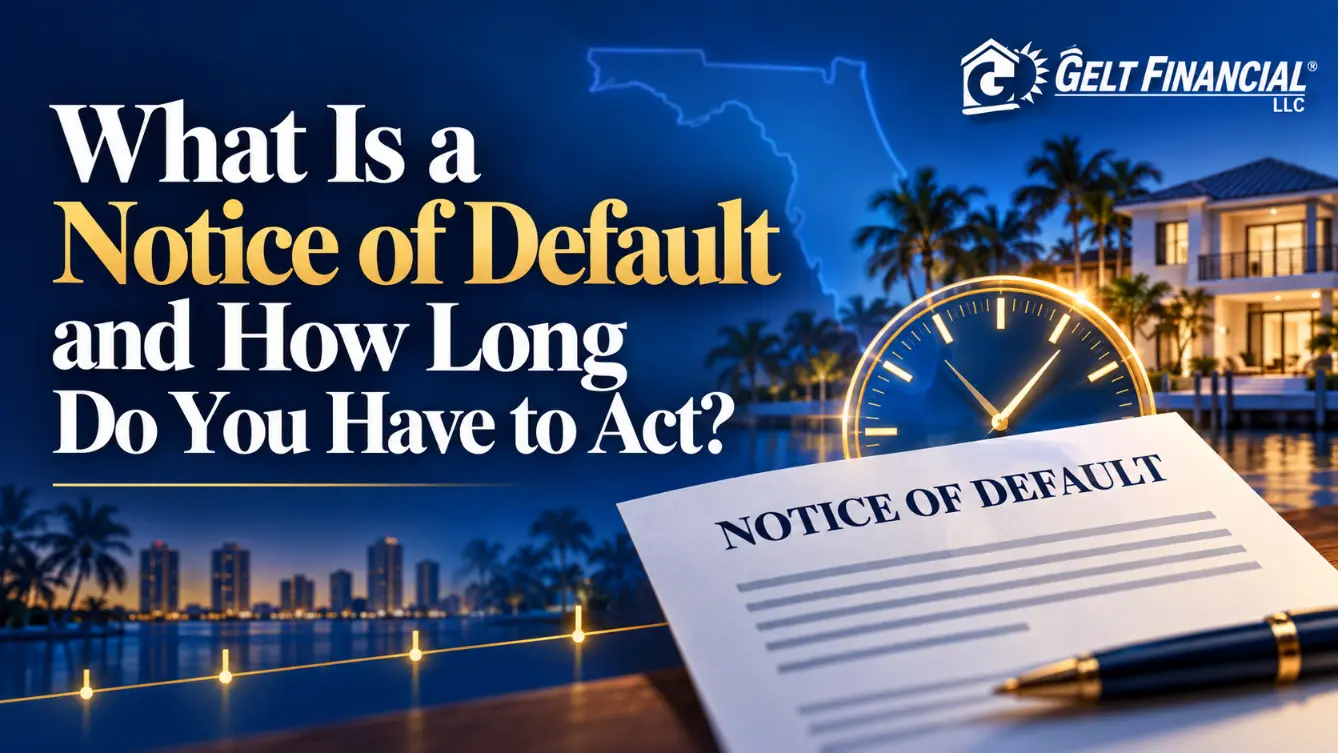
TL;DR: A notice of default is a formal letter from your mortgage lender or servicer stating that your loan is in default, whether from missed payments, a maturity default, or another breach of the loan terms.
If you’re a homeowner or borrower who has fallen behind on mortgage payments, this notice matters because it marks the point where your lender is formally moving toward foreclosure unless you fix the delinquency or work out another solution. A default notice is the document a mortgage lender sends once you’ve fallen behind on payments and the account has moved into default. It’s not the foreclosure itself. It’s a warning, and it’s also often the first step that becomes public record.
Below, you’ll see what triggers a notice of default, what information it includes, how much time you may have to respond, what can happen if you ignore it, and the main ways to resolve it, including foreclosure bailout loans.
What Missed Payments Trigger a Notice of Default?
Missed payments are the most common trigger, but they’re far from the only one. Most lenders send a notice of default after a borrower has missed payments for around 90 days. Before that point, you’ll usually get letters and calls from your servicer trying to correct the account.
Many defaults have nothing to do with a late payment. A maturity default happens when the loan reaches its maturity date, and the balance isn’t repaid. It’s common with short-term investor loans. Lenders can also declare a default for unpaid property taxes, a lapse in insurance, or an unapproved transfer of the property. Failing to comply with other terms of the loan contract can trigger one too.
These defaults can move faster, since the lender doesn’t wait for months of missed payments to build up. Once the account is officially in default, the lender’s next move is to formally document that fact and start the clock on your response.
What Does a Notice of Default Actually Say?
The document usually explains a few key details:
- The reason for the default, such as missed payments or a matured loan
- The total amount owed, including missed payments and fees
- The date the account went into default
- Instructions to contact the servicer to repay or negotiate
- Your right to cure the default within a set period
- A note that the lender may begin foreclosure if the debt isn’t resolved
In non-judicial states like California, this notice is also filed with the county recorder’s office, making the default a matter of public record tied to the deed. As a result, the homeowner may start receiving unsolicited offers from investors or foreclosure companies.
How Long Do You Have to Act After a Notice of Default?

This depends on your state and your loan contract, but most borrowers have somewhere between 30 and 90 days before the next formal step in the foreclosure process. State law or your loan documents generally set that window.
Document all communications with your lender for future reference. Receiving an NOD does not mean immediate loss of the home; homeowners can remain during the process. Receiving an NOD does not mean immediate loss of the home; homeowners can remain during the process.
There are really two separate clocks here. The first is the cure period stated in the notice itself, the time you have to pay the amount owed and bring the account current. The second is the longer window before the lender can legally file in court or record a notice of sale, if the default still isn’t resolved.
Notice of Default Timeline by Process Type
| Stage | Judicial States | Non-Judicial States |
|---|---|---|
| Cure period after notice | 30 to 90 days, varies by state | 30 to 90 days, varies by state |
| Next step if unresolved | Lender files in the court system | Lender records a notice of sale |
| Typical time to next filing | Weeks to a few months | Weeks to a few months |
What Happens If You Ignore the Notice?
If you ignore a default notice, the lender moves forward. That means filing in court in a judicial state, or recording the next document toward a sale in a non-judicial state like California. Every day that passes without contact makes it harder to negotiate and can cost you more money as legal fees begin to pile up. Start seeking help early, before the case moves deeper into foreclosure proceedings.
What Are Your Options After Receiving a Notice of Default?

You have more room to act here than most people realize.
- Contact your lender or servicer to explain your circumstances and ask about a repayment plan if you’ve already missed repayments
- Apply for a loan modification if your finances have changed and the current terms aren’t affordable
- Ask for a loan extension if your loan has matured and you need more time to refinance or sell
- Refinance if your income, credit, and interest rate still allow it
- Sell the property before the default moves further into the foreclosure process
- Reach out to an attorney if you need help understanding your contract or your rights
Bringing the loan fully current is called reinstatement. For a maturity default, the fix is usually a payoff, an extension, or a refinance instead.
Ready to talk through your options before the clock runs out? Call us at 561-221-0900 for a free, honest conversation and help to create a plan for what you can afford.
Why Timing Matters More Than the Amount Owed
The total amount owed feels like the biggest problem, but timing usually matters more. Options that are open today: a repayment plan, a modification, a quiet sale, often close once a case moves further into the court system. Contact your servicer or seek help the moment you receive the notice, not after.
What Should Florida Commercial Property Owners Know About Foreclosure?

Commercial mortgages in Florida follow a distinct set of rules and exposures compared to a typical residential loan. Here’s what property owners and real estate investors should know.
- Florida is a judicial foreclosure state, so mortgage foreclosures are judicial proceedings governed by Section 45.031, Florida Statutes, and this applies to commercial loans the same as residential ones.
- Under Florida law, the lender must demonstrate the right to foreclose by filing a certification that it holds the original mortgage note, or, if the note has been lost, a lost note affidavit with a clear chain of endorsements, transfers, and assignments.
- Under Section 702.10, any lienholder in the case, not just the foreclosing lender, can ask the court for an expedited “order to show cause.” This process has been in place since 2013 and can speed up an uncontested commercial case.
- Your mortgage holder generally has five years from the date the final payment is due to bring a foreclosure action in Florida, per the statute of limitations.
- The Florida Supreme Court’s Bartram decision confirmed that a lender can restart that five-year clock by filing a new foreclosure action based on a default occurring after a prior case was dismissed, so a past dismissal doesn’t permanently protect a borrower.
- After a foreclosure sale, a lender can pursue a deficiency judgment for any shortfall. The one-year deadline under Section 95.11 only covers one-to-four-unit residential property. On commercial property, lenders generally have five years under the standard limit for written contracts.
- The fair market value cap on deficiency judgments only applies to owner-occupied residential property, meaning commercial property owners can face a larger deficiency exposure than a residential borrower with the same shortfall.
- Commercial mortgages commonly include a personal guaranty, and Florida courts generally enforce that guaranty separately from the mortgage foreclosure itself, so a business owner’s personal assets can remain at risk even after the property sells.
- Courts in commercial foreclosure cases often appoint a receiver to manage an income-producing property, collecting rent and overseeing operations while litigation is pending, a step used far more often in commercial cases than residential ones.
- Florida law doesn’t provide a statutory right to reinstate the loan before the sale, so once a case reaches that stage, a borrower typically needs to pay off the full accelerated balance or negotiate directly with the lender.
- Because Florida requires judicial foreclosure, any provision in a commercial mortgage that lets a lender take possession, manage, or sell the property without completing a court foreclosure is unenforceable in the state.
- Once a final judgment is entered, the clerk of court sets the sale date, and most major Florida counties, including those covering Tampa, Orlando, Jacksonville, and Lakeland, now conduct foreclosure sales entirely online.
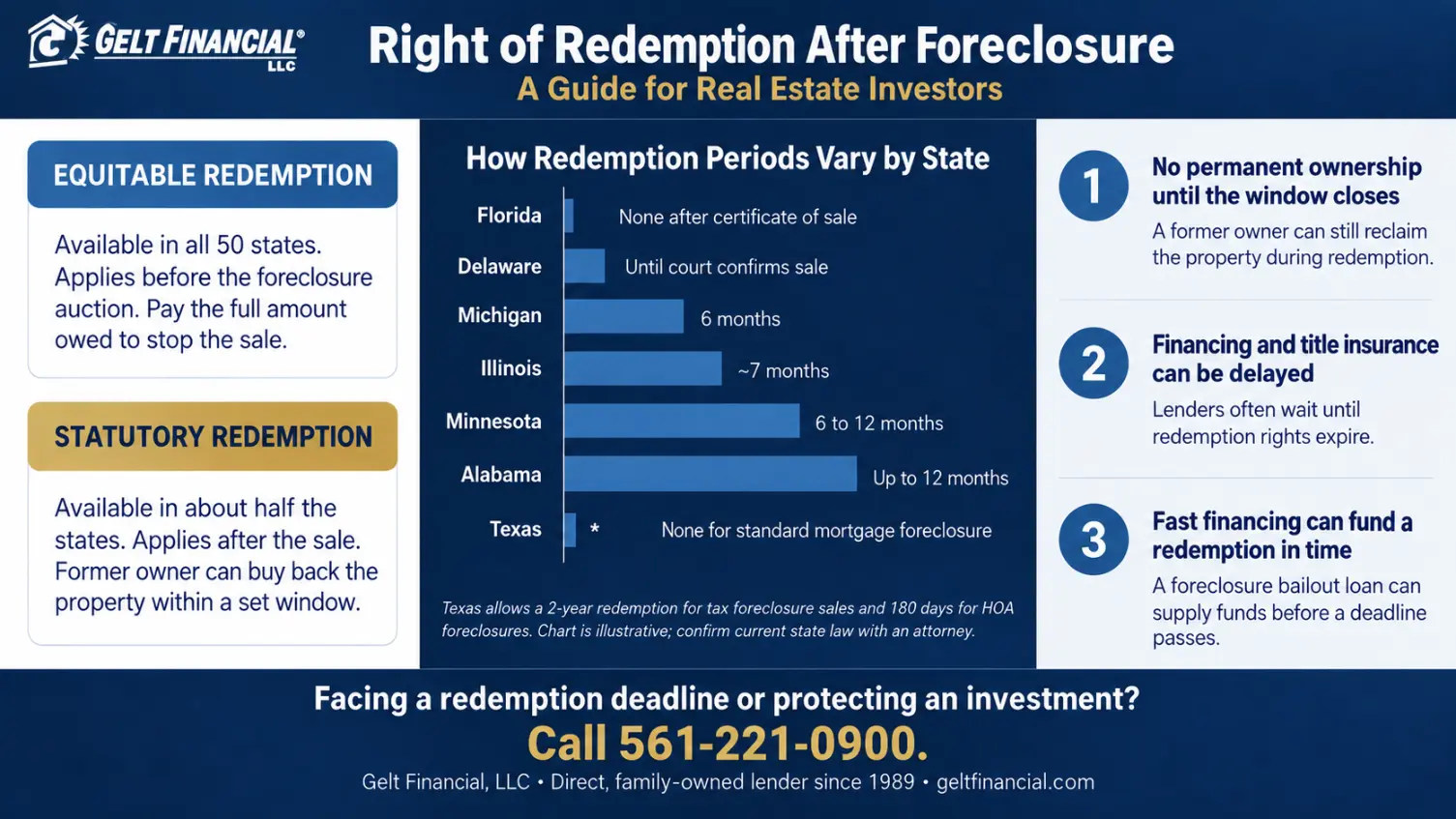
- Florida has no post-sale redemption period once the certificate of sale is issued. Ownership transfers at that point, with no window to reclaim the property by paying off the debt.
- A lis pendens is recorded when the foreclosure complaint is filed, creating public notice of the pending case and clouding the property’s title until the matter resolves.
- In uncontested foreclosure proceedings where the lender waives any deficiency claim, Florida courts must enter final judgment within 90 days of the close of pleadings, giving both sides a defined resolution timeline.
Citations
Carlton Fields: What You Must Know About Florida’s Commercial Mortgage Foreclosure Process
Nolo: Florida Foreclosure Process, Complete Guide
Morey Law Firm: Florida’s New Foreclosure Law
Nolo: Statute of Limitations for Florida Mortgage Foreclosures
Hinshaw & Culbertson: Florida’s Highest Court Says Each Default Resets Statute of Limitations
Florida Senate: 2025 Florida Statutes, Chapter 702 (Section 702.065)
None of this replaces advice from an attorney familiar with your specific loan and county. It’s meant to give property owners and investors a clear, accurate starting point for understanding what’s actually at stake in a Florida commercial foreclosure.
Can a Foreclosure Bailout Loan Help at This Stage?
Yes, and this is often the easiest stage to resolve one. A foreclosure bailout loan can pay off the amount owed and stop the process before the lender files anything further, since no court costs have accrued yet. We’re a family-owned, direct lender, and we look at your property’s equity, not just your credit file, to get this resolved fast.
Key Takeaways
- A notice of default is a warning that your mortgage is in default, not a foreclosure filing itself
- You generally have 30 to 90 days to cure the default, depending on your state
- In non-judicial states like California, the notice becomes public record at the county recorder’s office
- Contacting your lender immediately preserves the most options
- A foreclosure bailout loan can resolve the debt before further legal steps begin
- Missed payments are the most common trigger, but maturity defaults, unpaid taxes, and insurance lapses can also lead to a notice of default
Frequently Asked Questions
Is a notice of default the same as foreclosure?
No. A notice of default is a warning that your loan is in default. Foreclosure is the legal process that follows if the default isn’t resolved.
How many days do you have to respond to a notice of default?
Most borrowers have 30 to 90 days, depending on state law and the terms of their loan contract.
Can you sell your house after receiving a notice of default?
Yes. Selling before the process moves further is one of the most common ways borrowers avoid losing the property entirely.
Does a notice of default hurt your credit?
Yes, a default is typically reported and can lower your credit score, though acting quickly to resolve it limits further damage.
Can you stop a notice of default once it’s issued?
Yes. Paying the amount owed, negotiating a repayment plan or extension, or securing a foreclosure bailout loan can all resolve it before the lender takes further action.
Facing a mortgage default and need to act fast? Call us at 561-221-0900 today! Gelt Financial is ready to discuss your financing needs for commercial or investment real estate.